Build your own team of GTM agents.
Before you hire a go-to-market team, you can build one. A set of agents that research accounts in depth, find the buyer, draft the outreach, and surface the replies worth your time — overnight, on tools you already have. No engineer required.
I build what B2B teams run on.
First — why listen to me on this.
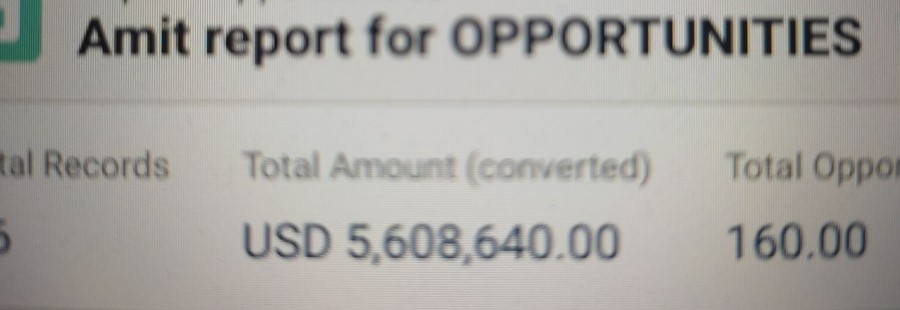
- Ex-SDR at Google Cloud. Years in outbound before AI — best quarter, $5.6M in pipeline.
- Today I build custom AI agent teams for B2B revenue teams.
- The same engine those companies pay for, you can stand up yourself — before your first hire.


Spray-and-pray is dead.
AI handed every team a bigger send button — so everyone pressed it. Buyers went numb. Generic volume now gets ignored, deleted, marked spam. More stopped being the edge.
What stopped working
- Blast the same email to thousands
- Buy a bigger list, send more
- "Personalization" that's just a first name
- Win on volume
What wins now
- Reach the few that actually fit
- One message that could only be for them
- Relevance a human would need hours for
- Win on depth
So you do the hard thing — deep research.
The work that lands is the work nobody has time for: understanding an account the way you would with four spare hours. The agent does that heavy lifting in under an hour — and hands you the angle.
What an agent actually is.
The word's been beaten to death. Here's the real definition — five things.
No code. You brief it like a new hire.
If you can brief a teammate in plain English, you can build this — no engineer, no platform. You give it the goal and the guardrails, not a script, and let it reason.
Step 2, do Y.
Step 3, you must produce Z."
No data? It invents — the structure says it must finish.
Here is the goal & the constraints.
You're intelligent — use your judgment.
If the data isn't there, say so."
One agent per job — a team, not a hero.
Each does one thing well — the way a great SDR thinks, broken into a pipeline.
QA's job is to find the mistakes.
One agent whose whole purpose is to distrust the others' work — re-open the actual sources, check every claim, and send anything that doesn't hold up back to be fixed.
Each agent is its own session — with its own brain.
An agent is a Claude Code session pointed at one job, with a folder of plain-text files for memory: who the client is, who counts as a fit, what "good" looks like.
Correct it once. It remembers.
When the agent gets something wrong, you don't reprogram it — you tell it, and the fix goes into its memory. Next run, it's already better.
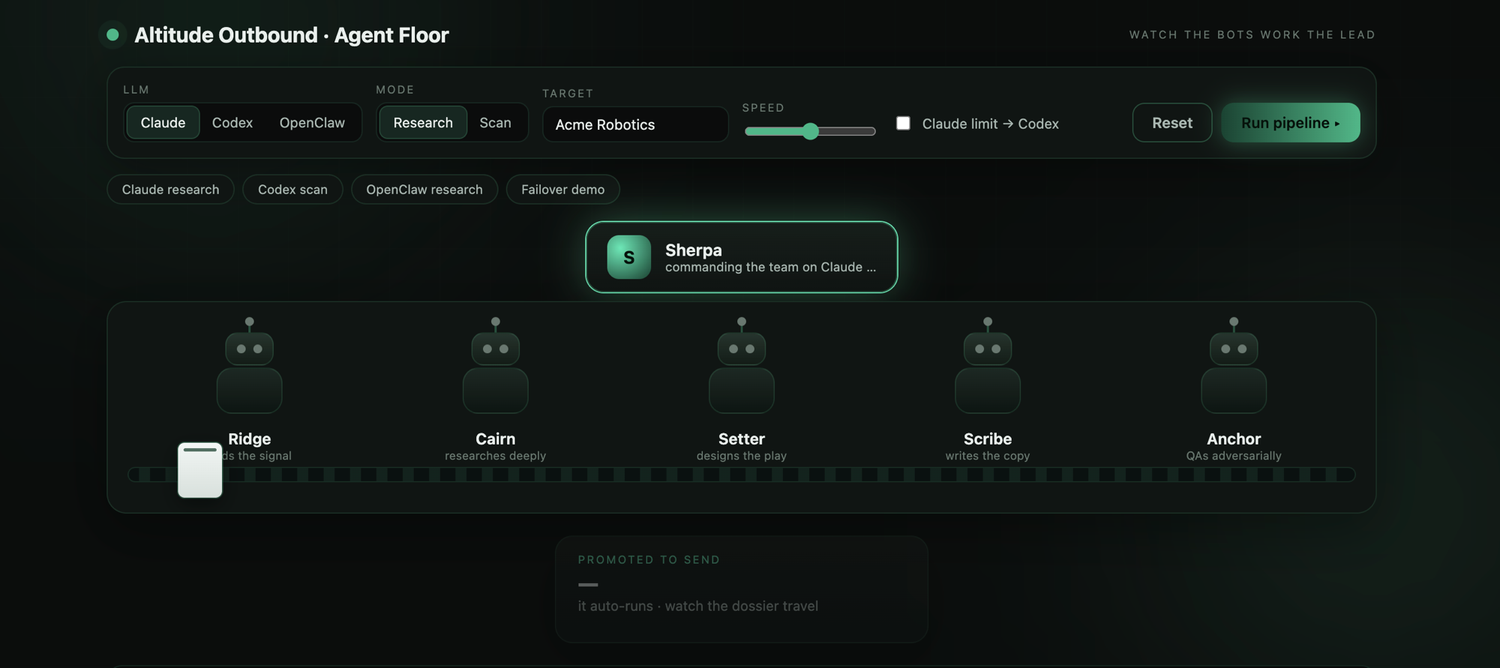
It's real. Let me show you — live.
Pick the model, point the team at an account, and watch the agents work the lead end to end.
Not a team replacement — a force multiplier.
Let's be straight: this doesn't replace a sales team. It's a serious, always-on capability that a small team — or a solo founder — can run for a few hundred dollars a month.
Start with one agent — the task you hate most. The team grows from there, and your first hire can wait until you've proven what works.
📘